Showing posts with label Real vs Fake?. Show all posts

Wednesday, June 22, 2011

Real vs Fake, Part VI - Salad Dressing

I've mentioned before of my struggles to find an acceptable ( to my taste buds ) CE alternative to bottled salad dressing. Problem is, even after almost a year, I still find myself vaguely dissatisfied by CE salad dressings. After doing a little research this morning...I'd say an attitude adjustment is coming my way!


The salad dressing aisle in the grocery store is chock full of flavor variations and styles. Unfortunately, almost all are heavily salted, heavily sugared, and just plain Unclean. Even brands that promote themselves as fat free or "healthier" alternatives are just as bad.


The ingredients in Kraft Fat Free Italian Dressing:

water, vinegar, high fructose corn syrup, corn syrup, salt, contains less than 2% of parmesan cheese (part-skim milk, cheese culture, salt, enzymes), garlic, onion juice, whey, phosphoric acid, xanthan gum, potassium sorbate and calcium disodium edta as preservatives, yeast extract, spice, red bell peppers, lemon juice concentrate, dried garlic, buttermilk, caramel color, sodium phosphate, enzymes, oleoresin paprika

Water, vinegar, sugar, sugar, salt. Yum ( not )!

Fake salad dressing comes in a bottle. There is no way around it; real salad dressing is made at home in small batches.


Real Italian dressing is olive oil, vinegar, perhaps a few herbs, and salt and pepper. Pretty simple and definitely made of stuff that’s good for you and that you can easily envision in its natural state. We all know that olive oil is a healthy oil and the rest of the ingredients don’t have any real drawbacks. The best part is that you can tailor this dressing to your own liking. Add minced garlic, or pepperoncini juice instead of salt.

Thursday, April 14, 2011

Real vs. Fake, Part V : Maple Syrup

What is the difference between this:


and this?


As you might expect from the title of this post...a lot! The upper bottle is a bottle of pure, 100% maple syrup made from the sap of the maple tree. For a strong sugar, it is Clean - and in small servings will add a strong maple flavor to your foods.

Maple syrup is divided into two major grades in the US: Grade A and Grade B.

Grade A is further broken down into three sub-grades: Light Amber (sometimes known as Fancy), Medium Amber, and Dark Amber. Grade B is darker than Grade A Dark Amber.

From left to right:
Vermont Fancy, Grade A Medium Amber, Grade A Dark Amber, Grade B


The bottle on the bottom is faux syrup - so unlike maple syrup that anything that isn't made entirely of maple sap (besides a pinch or two of salt or other seasonings) cannot legally be marketed as "maple syrup". Next time you see the syrup isle of a grocery store, or you look into your pantry, take a look at all the bottles of syrup in there. I can guaruntee you that, unless it is made of pure maple syrup, you will not see the word "maple" anywhere on those bottles. Indeed, the bottom on the bottle doesn't mention the word
"maple" anywhere. But if the bottle says "Pancake syrup", "waffle syrup", or "table syrup" - you can be assured you have a handful of high fructose corn syrup and artificial coloring and flavoring. People in Canada and along the most Northern US states sometimes refer to imitation maple syrup as sirop de poteau ("pole syrup"), a joke referring to the syrup as having been made by tapping telephone poles.

What is faux syrup made of? 

Ingredients: Corn syrup, high fructose corn syrup, water, cellulose gum, caramel color, salt, sodium benzoate and sorbic acid (preservatives), artificial and natural flavors, sodium hexametaphosphate ( ?? )

Recently, Log Cabin released a new, "natural" syrup. Looking at the bottle, you might be fooled at the grocery store into thinking this is "real" maple syrup. They even mimic the cute little jug Vermont and Canadian maple syrups are often packed in.


But wait, what is this? Check out the ingredients:


This "all natural syrup" is actually a mixture of Brown Rice syrup, sugar, and only 4% maple syrup - and they add caramel color to make it look more convincing. Look at the carbs!


Of course - if you are going to use maple syrup, buy a bottle of the expensive stuff - the real thing. The flavor will be better, it is actually a healthier choice, and you will be supporting small farmers who grow the maple trees.

Saturday, February 12, 2011

Real vs Fake, Part IV - Chocolate

Chocolate - real, honest, dark chocolate - is kind of clean. Ingredients? Ground and tempered cocoa beans, sugar ( CE in the "It comes from the Earth" sense but white sugars are so overprocessed as to be unclean ... ), milk, lecithin ( a naturally occurring fatty lipid that binds chocolate ingredients together ), flavorings like vanilla, and maybe veg oil.

Now, most people who are CE only use cocoa powder, as it is much healthier and cleaner than bar chocolate. It adds that chocolate zing to dessert recipes that you may have forsaken in your quest for CE.

I'm not purporting real chocolate to be Clean by any means - but I am trying to relay that what you think might be chocolate isn't really chocolate at all.

Due to the tremendous increase in the cost of cocoa beans in the last 10 years, many chocolatiers have reformulated their chocolates to be a candy substance that the USDA doesn't even legally allow them to call chocolate anymore. Instead of adding pure cocoa butter to their mixes, manufacturers have learned a trick to replace much of that real cocoa butter with cheaper vegetable oils - producing "mocklate" as some call it. It looks like chocolate, kindof tastes chocolatey - but it isn't chocolate.

The removal of cocoa butter violates the U.S. Food and Drug Administration’s definition of milk chocolate, so subtle changes have appeared on the labels of the Hershey’s products with altered recipes.

Products once labeled “milk chocolate” now say “chocolate candy,” “made with chocolate” or “chocolatey.”

Here's a tricky test that skirts the USDA rules: Which bar is real, and which is fake?


The top picture shows an old wrapper - one that represents a bar of chocolate made with cocoa butter ( and the limited but present health benefits of cocoa butter. ) 
The bottom picture shows the new wrapper - the reformulated product that is largely vegetable oil based. 

How do they get away with this? I am unsure. I'm trying to do research on it - but notice the difference in net weight on the packages. The real bar says net weight 1.55 ounces. The reformulation says 15.55 ounces. Same size bar. Why?  I'll let you know what I find. 

Here's another. Hershey's Kissables used to be labeled as candy coated milk chocolate. because of the extreme reformulation, they now must be called chocolate candies:


Just a visual wake up here. When you look at processed foods, the wrapper can say a lot of misleading things to make you think you know what you are eating. Be watchful, be mindful. You may think a processed food is Clean. Read the ingredients, do research, and make the decision for yourself.

Sunday, January 30, 2011

Real vs Fake, Part III - Meat Substitute Burgers

This one saddens me, I have to admit. I like Morningstar and Boca meatless burgers - a lot. Yes, they are proceessed. Yes they are man made , and, unmistakeably, they are unclean. I guess I was turning a blind eye to them. Well, after my research for this piece...I can't, anymore. These will not be part of my diet any longer...and I just got a bunch of killer Morningstar coupons, too! :-(

Morningstar and Boca brand burgers are essentially texturized soy protein ( which, in and of itself is flavorless, and I would admit - mostly harmless ) with added colorings, flavorings, and salt...a lot of salt. Some variations have cheese in there ( not labeled as organic in any way ), some with chemicals I just can't even pronounce.


Boca Burgers ( All American Flame Grilled ): Water, Soy protein concentrate, reduced fat cheddar cheese ( Pasturized part-skim milk, cheese culture, salt, enzymes, annatto color, vitamin A palmitate ), wheat gluten, corn oil - contains less than 2% of methylcellulose, hydrolyzed corn protein, wheat gluten, and soy protein, salt, caramel color, cheese powder ( cheddar cheese {milk, cheese culture, salt, enzymes}, cream , salt, sodium phosphate, lactic acid ), dried onions, yeast extract, natural flavor ( non-meat ), sesame oil, disodium guanylate, disodium inosinate, browned in corn oil.


Morningstar Chik Patties ( Original ): 
TEXTURED VEGETABLE PROTEIN (SOY PROTEIN CONCENTRATE, SOY PROTEIN ISOLATE, WHEAT GLUTEN, WATER FOR HYDRATION), WATER, BLEACHED WHEAT FLOUR, ENRICHED FLOUR (WHEAT FLOUR, NIACIN, REDUCED IRON, THIAMIN MONONITRATE, RIBOFLAVIN, FOLIC ACID), CORN OIL, CORNSTARCH, YELLOW CORN FLOUR, CONTAINS TWO PERCENT OR LESS OF WHEAT STARCH, SALT, WHEAT GLUTEN, DEXTROSE, METHYLCELLULOSE, MODIFIED CORN STARCH, HYDROLYZED CORN AND SOY PROTEIN, POTASSIUM CHLORIDE, SUGAR, NATURAL AND ARTIFICIAL FLAVORS FROM NON-MEAT SOURCES, AUTOLYZED YEAST EXTRACT, YEAST EXTRACT, SOYBEAN OIL, MALTODEXTRIN, SOY PROTEIN ISOLATE, LEAVENING (SODIUM ACID PYROPHOSPHATE, BAKING SODA), DISODIUM INOSINATE, ONION, DRIED YEAST, CARAMEL COLOR, INULIN FROM CHICORY ROOT, SPICES, XANTHAN GUM, TAPIOCA DEXTRIN, SODIUM ALGINATE, GUAR GUM, PAPRIKA EXTRACT FOR COLOR, CELLULOSE GUM, CITRIC ACID, LACTIC ACID, ANNATTO EXTRACT FOR COLOR, GARLIC, PAPRIKA, DISODIUM GUANYLATE, CELERY EXTRACT, WHEAT FIBER, TURMERIC FOR COLOR, BARLEY EXTRACT, NIACINAMIDE, NONFAT DRY MILK, EGG WHITES, SUCCINIC ACID, IRON (FERROUS SULFATE), THIAMIN MONONITRATE (VITAMIN B1), PYRIDOXINE HYDROCHLORIDE (VITAMIN B6), RIBOFLAVIN (VITAMIN B2), VITAMIN B12.
( Honestly, sorry for the all caps. I copied it from their website, and that's just too much for me to retype with only 1 cup of coffee in my system ) 


Clearly - added starches, chemicals, proteins, salts. Not clean by any stretch of the imagination. This is one of those items that masquerades as health food, but really isn't healthy at all. Each Boca burger has almost 400 mg of sodium; each Chik patty has 590 mg. The chik patties have white flour in them ( no thank you! ) and the added gums and starches to make it form a patty.


Best bet if like me, you've been popping these into the microwave for a quick low calorie lunch? On Sundays, buy a tray of organic chicken breasts, a tray of organic grass fed hamburger patties, grill them on your George Foreman type grill, and package them once cool individually for lunches throughout the week. This will be what I will be doing from now on. 


I don't have a problem admitting when I've made a mistake ( usually...) and here's one time, I was wrong. These meat substitute burgers aren't clean.

Thursday, January 27, 2011

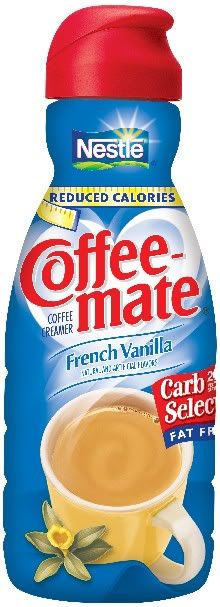
Real vs Fake, Part Deux - "Non Dairy Creamer"

Next up in our discussion of real versus fake foods is non-dairy creamer.


 So many people use this stuff daily - previously, myself included - that you'd think we'd be more aware of what this non-food really contains. The bottle tells the whole story, too. The one I've chosen doesn't even HAVE the word dairy on  it. They just call it a generic term "coffee creamer" Instant red flag. Look at the back label for the verdict:

Ingredient list: Corn syrup solids, Partially hydrogenated vegetable oil (coconut, palm kernel or hydrogenated soybean), sodium caseinate (a milk derivative but not a source of lactose), Dipotassium phosphate, mono- and digycerides, artificial flavor and annatto color.”

So what is it? Corn syrup solids? That's sugar. Partially hydrogenated veg oil? That's your key right there...anything partially hydrogenated is a trans fat.  Sodium caseinate ( a milk derivative - how can it be non-dairy if it has a milk derivative in it?? ) is added to make it feel more like creamy milk in your mouth. You've got some stabilizing chemicals, then artificial flavor ( could be just about anything! ) and then annatto color, which is a food colorant made from annatto seeds ( pretty harmless ).

Bottom line? You are adding sweetened trans fat to your coffee. Ugh. Your poor little heart is saying "Help me! Help me!" every time you sip your coffee.

Do yourself and your heart a favor. Clean up your diet instantly by removing non-dairy creamer from your routine. Buy a small container of real milk - 4% high test if you want, 1% or skim would be better - and organic, please...no use cleaning up your diet only to add the suspicious chemicals and hormones found in non-organic milks.

There is nothing wrong with coffee. It is a clean food. Coffee bean grounds steeped in hot water. However - it is the additions you make to your coffee that turn it from clean to unclean. Be careful, and be choosy.  

Question your choices. Examine your routine, and look at each "Well, I always eat that!" with a careful eye.

Friday, January 21, 2011

Real vs Fake - Part 1

In this first post talking about real food versus fake food, I'd like to discuss one of my biggest pet peeves: cheese. So much fake cheese is manufactured these days, sometimes it is hard to tell the difference - but because of labeling requirements in the US and elsewhere, you can tell the difference if you look for certain key words.

Real or Fake?


Yep - fake food. See the words "cheese product" at the bottom of the page? Any time the product says "cheese product" or "cheese food", you know it is not real cheese. The USDA requires fake cheese to be identified this way.
Cheese product has had modification of the water and butterfat levels, a lot of substances may be added to pasteurized process cheese food, such as dry milk, whey solids,  and anhydrous milk fat. The list is longer for pasteurized process cheese spread, which can contain sweeteners and stabilizers (substances that prevent separation), such as xanthan gum or carrageenan. In a former life, it was cheese - but it has been too "messed around with" to be labeled cheese - by anyone.


Some definitions:


 Pasteurized process cheese food is a variation of process cheese that may have dry milk, whey solids, or anhydrous milkfat added, which reduces the amount of cheese in the finished product. It must contain at least 51% of the cheese ingredient by weight, have a moisture content less than 44%, and have at least 23% milkfat.
 Pasteurized process cheese spread is a variation on cheese food that may contain a sweetener and a stabilizing agent, such as the polysaccharide xanthan gum or the Irish moss colloid carrageenan, to prevent separation of the ingredients. The cheese must be spreadable at 70 F, contain 44 to 60% moisture, and have at least 20% milkfat.
 Pasteurized process cheese product is process cheese that doesn't meet the moisture and/or milkfat standards.
 Imitation cheese is made from vegetable oil; it is less expensive, but also has less flavor and doesn't melt well.


For the record, Velveeta is pasteurized process cheese spread and Velveeta Light is pasteurized process cheese product. Cheez Whiz is labeled as pasteurized process cheese sauce

 Real or Fake?


Yes, fake again. Here, they don't even call it cheese. It is just "Parmesan style topping" - ewww. You are much better off buying a small wedge of real Parmesan and grating it yourself. This is a shaker can full of powdered chemicals and cheese leftovers.


If cheese is part of your clean eating nutritional choices, take steps to ensure what you are eating IS cheese. Read the labels, question the ingredient list, and, for the most part, opt for the more expensive cheeses. Those are typically the real thing.